
Adaptive Work Instructions For Every Situation

Conditional logic is rolling out to all Squint customers over the coming weeks. Now a procedure can adapt to the work in front of the operator, shaping itself to the job up front and surfacing the right steps as conditions come up. The logic lives in the procedure, so the operator follows one procedure instead of judging which instructions apply and switching between them.
What we built
Procedures in Squint can now adapt based on context, in two ways.
Before the work starts, a procedure shapes itself to the job: the equipment, the line, the shift, the work order. When a job is created in your work order system, Squint turns it into a task and sends it to the right person with that context attached, so the procedure opens already set to the right path.
.gif)
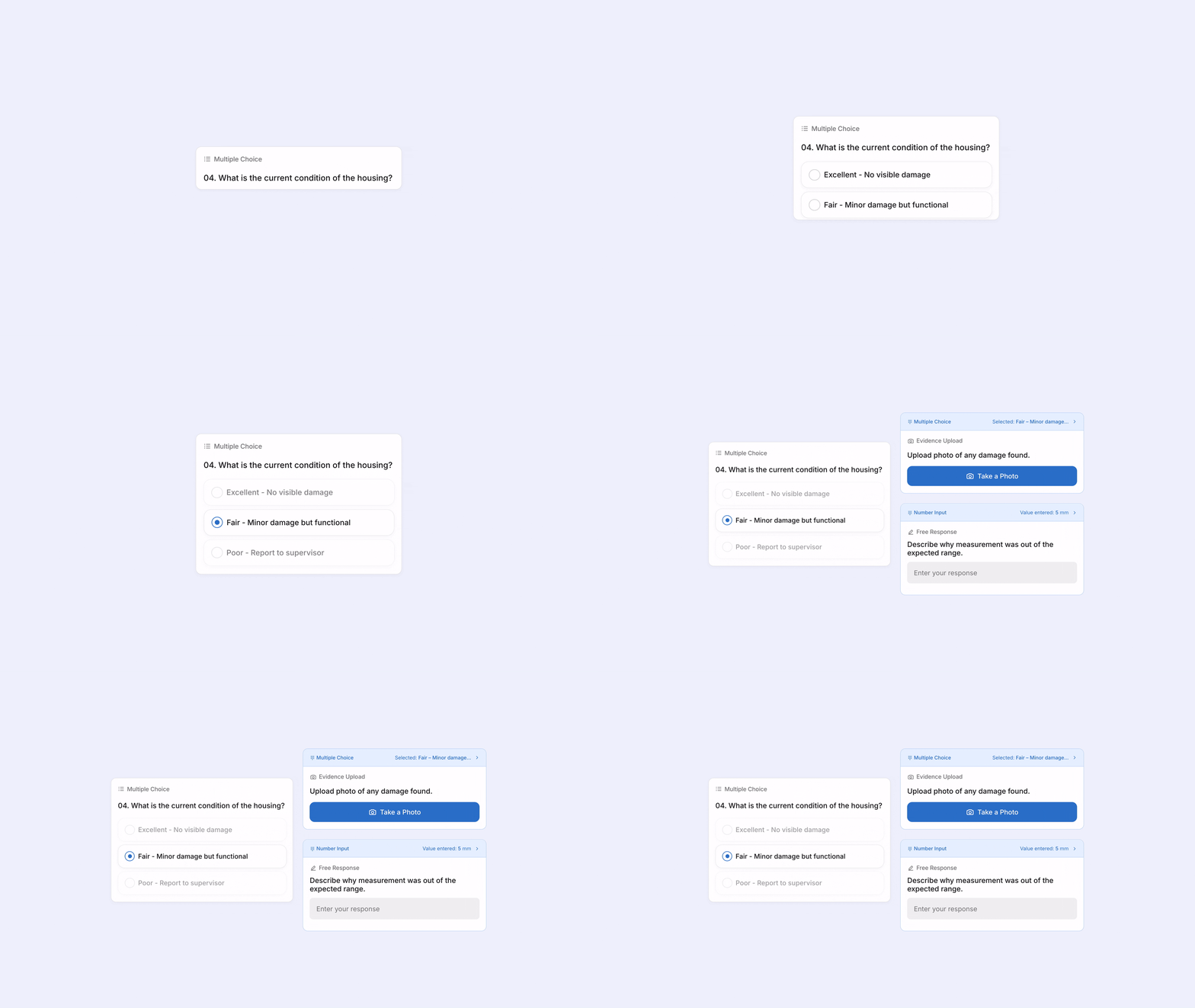
During the work, a procedure responds to what the operator enters. A reading out of spec, a part marked damaged, a leak flagged on an inspection. The procedure surfaces only the steps that match the situation and hides the ones that don’t. When authors build procedures, they set these conditions up front. A step can be set to appear based on:
- a typed answer, matched on what it equals or contains
- a multiple choice selection
- a number, matched on a threshold or a range
Conditions can be combined, so a step can depend on more than one at once.
Why we built it
The right steps for a procedure change from one job to the next. They depend on the equipment in front of the operator, the product running on the line, or what a technician finds when they open the panel.
Until now, figuring that out fell to the operator. They had to know which procedure applied, pull up the right one, and switch between documents as the job changed, relying on judgment and memory to land on the right steps. With conditional logic, even the most complex, decision-heavy work shows up as one, clear path for an operator to follow.
What it unlocks
The hardest work finally gets captured well. Procedures that used to depend on manual workarounds, like telling an operator to skip to step 19 if the answer is yes, or that never got written down at all, now run as one clear path with the decisions built in.
The work stays in one flow. A procedure can be built from a recording of the work or from the documents you already have, then shaped to your standards before anyone runs it. When a work order is created, Squint turns it into a task and routes it to the right person with the job's details already filled in. The procedure guides them through it, adapts when something turns up, and leaves a record a supervisor can review and approve. Because the work happens in Squint, that record is audit-ready the moment the job is done, with performance history and a direct CSV export in the app. And it all works offline, syncing when the device is back in range.
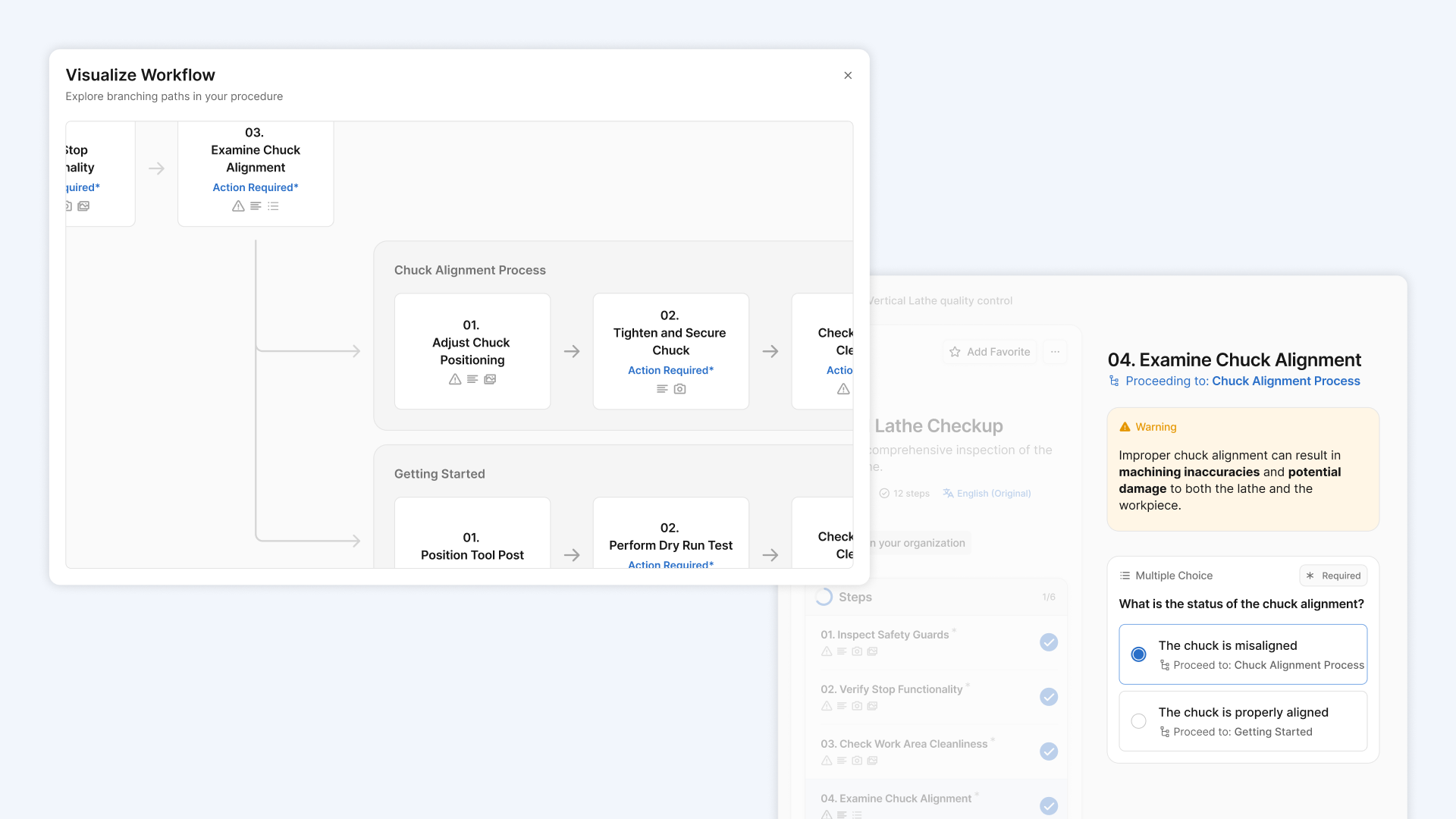
Every operator runs the current standard. The right steps are built into the procedure, so the work is done the same way across people and sites, in the language each operator works in. When the standard changes, that is one edit, and everyone sees it the next time they open the procedure.
How teams are using it
- On a changeover, the operator picks the product they are running and the procedure loads the targets for it, the right pressures, speeds, and tolerances, so the line gets set correctly and a drifting reading gets caught before it becomes scrap.
- When an inspection turns up a problem, a leak, a worn part, an out-of-range reading, the procedure opens the steps to document and resolve it on the spot, so the finding is captured and acted on instead of noted on paper and lost.
- A fleet inspection scales with mileage: a higher-mileage truck automatically gets the checks a newer one skips, so the technician runs the right list without deciding what applies.
- A field crew with no signal runs full compliance work in one procedure: photo evidence, conditional steps, knowledge checks, and signatures, all offline.
A procedure that bends to the work, instead of the work bending to the procedure. Want to see what conditional logic could unlock for your team? Schedule a demo.