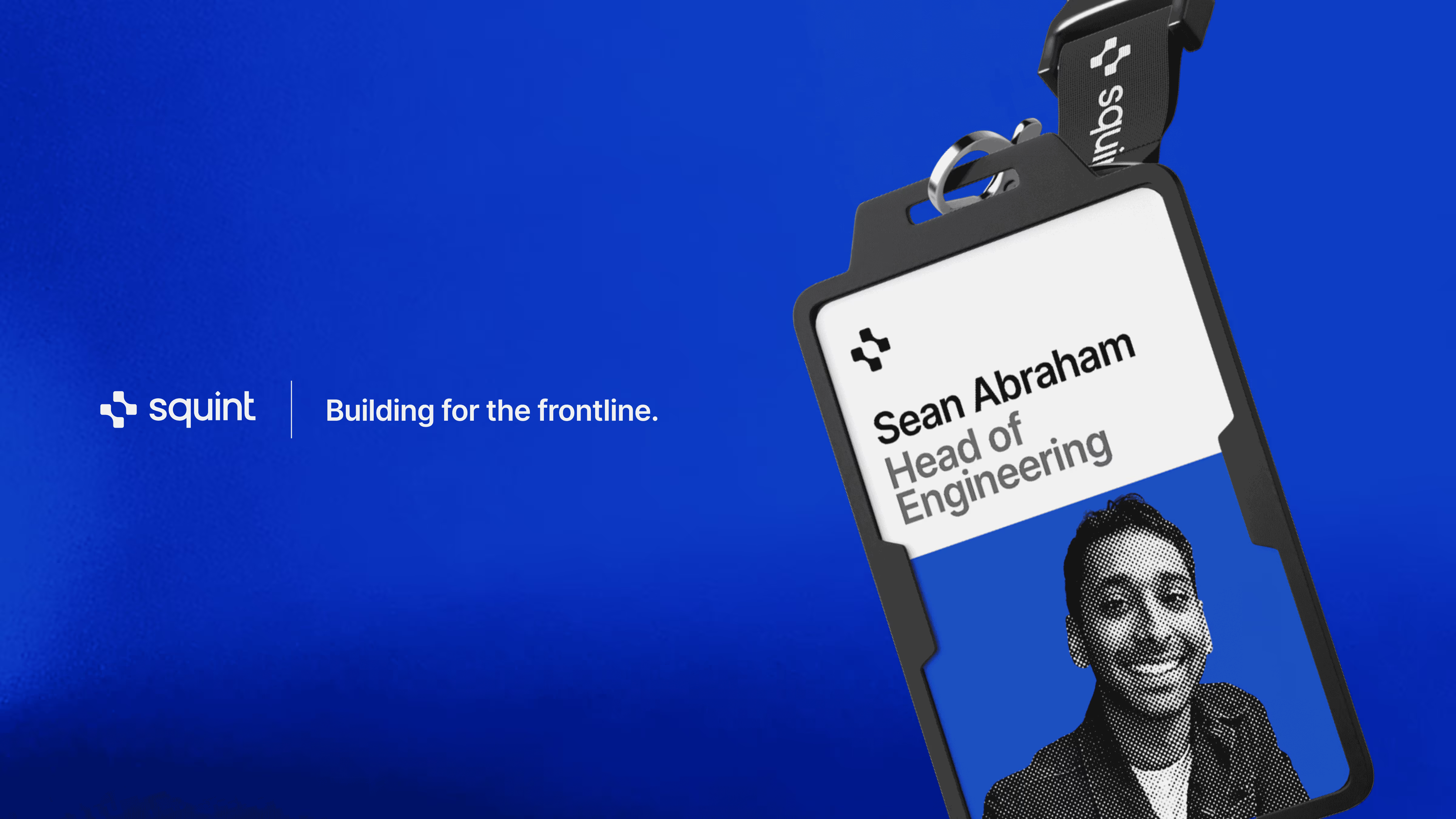
I Went Looking for Real Problems and Found a Factory

As an engineer, I’ve always been drawn to hard problems. But I’ve never found one as distinct, urgent, and overlooked as the one I’m working on now. At the end of 2025, I joined Squint.
This decision felt both bold and obvious. Bold because the company moves fast and tackles hard, foundational problems. Obvious because once I saw what we were building and how it was being used in the real world, it became hard to imagine working on anything else.
I’ve been here a few months now, but in some ways it feels like a year. Not because it’s been draining, but because it’s been full. New ideas, new challenges, and constant signals from the field that we’re solving real problems.
Building Real-World AI
There’s a lot of hype around AI right now. A lot of flashy demos and broad promises, but not a lot of grounded value.
What stood out to me about Squint was that it didn’t start with AI for AI’s sake. It started with a problem. In manufacturing, people are working in tough environments with outdated tools. The gap is real, and the need is urgent.
At Squint, the product works on day one. You can walk into a factory and watch someone use it to do their job better. That is not a vision or a future plan. It’s happening right now.
Teams can record how work gets done, annotate it, and turn it into a structured, reusable procedure. Managers can track progress. Operators can learn faster and make fewer mistakes. And once that core is in place, we layer in AI that actually helps. Step verification lets a worker snap a photo and instantly checks if it’s correct. Sounds simple, but under the hood, it requires a lot of precision and care. It only works because we built the right foundation first.
Why Manufacturing Matters
Not long after joining, I visited a factory where Squint is deployed. I put on PPE, steel-toed boots, and walked the floor. What I saw was a physical environment with real stakes. Machines running at scale. People working through noise, heat, and pressure. When things go wrong, the costs are measured in hours, dollars, and sometimes safety.
This isn’t a space that needs experimental tech or nice-to-have features. It needs tools that work, every time. Squint does that. It fits into the workflow. It’s fast, useful, and it’s getting better every week.
Manufacturing is a huge part of the global economy, and yet it’s been overlooked by a lot of modern software. There is so much potential here, and Squint is in a great position to unlock it.
What It’s Like to Build Here
The engineering culture at Squint is one of the best I’ve been part of. People are sharp, focused, and genuinely care about solving real problems. Things move fast, the bar is high, and the energy is real. It’s intense in a good way.
For me, the work spans a lot of levels. One day I’m deep in an architecture decision, the next I’m on-site with a customer seeing how the product fits into their day. That kind of context-switching can be a lot, but it’s also what makes the job interesting. You’re never that far from the actual impact of what we’re building.
We’ve built a team that can hold many perspectives at once. We don’t expect one person to be an expert in everything, but we do expect curiosity, collaboration, and willingness to shift context. It’s not easy, but it’s worth it.
That’s the opportunity here. It’s not just about building great software. It’s about changing how physical work gets done. If we can help someone do their job faster, train better, or spot issues sooner, that adds up. At scale, it’s a real shift in how industries operate.
And we’re just getting started.